
Sargassum in St. Maarten
What visitors and property buyers should know right now
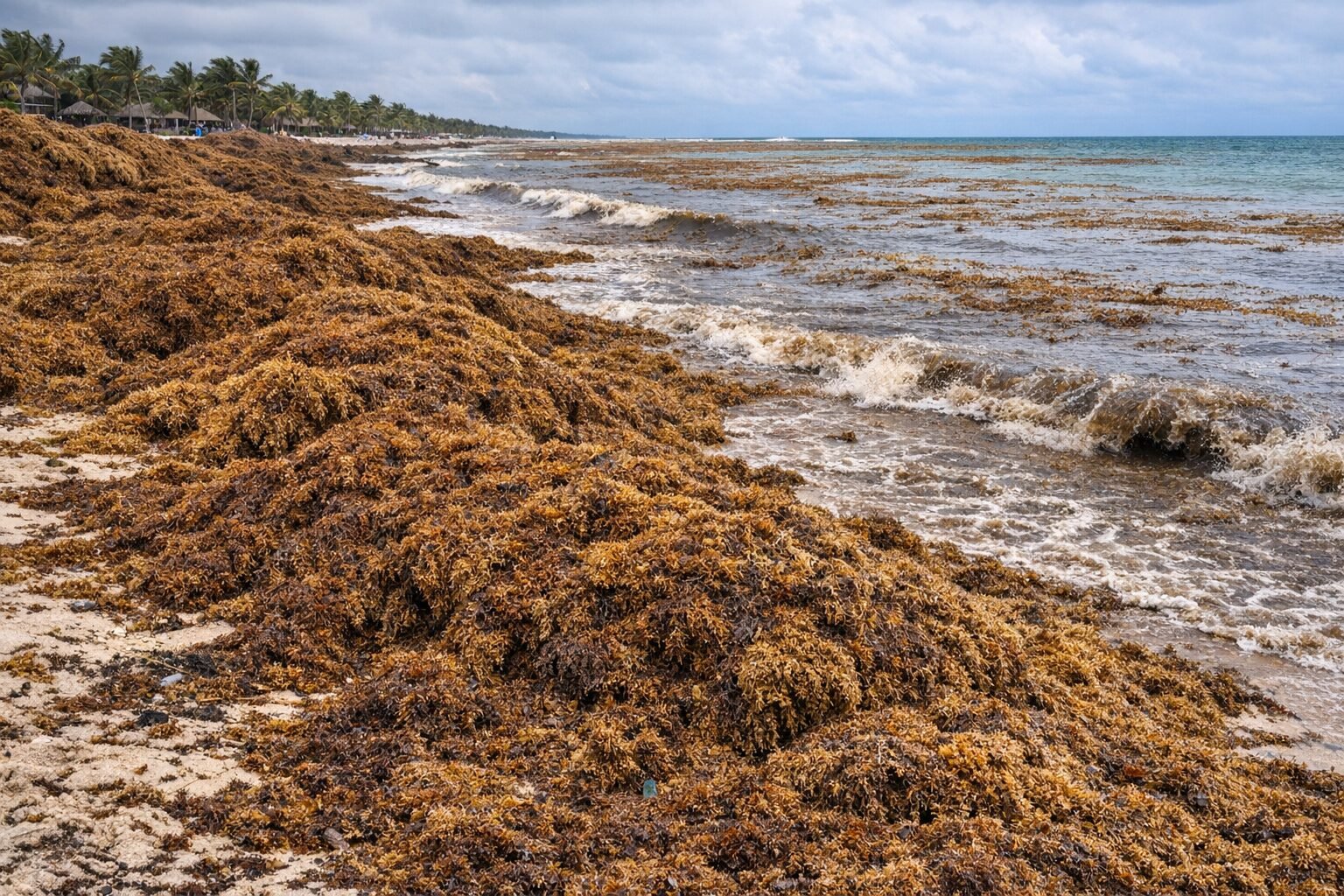
Sargassum has become a hot topic across the Caribbean, and St. Maarten is no exception. For visitors, homeowners, and anyone considering a stay or investment on the island, it’s helpful to understand what it is, where it shows up, and how it may affect your experience.
What is Sargassum?
Sargassum is a natural floating seaweed that travels across the Atlantic Ocean in large seasonal blooms. In recent years, these blooms have increased in size and frequency, reaching many Caribbean destinations, including St. Maarten.
It is important to note that this is not pollution on the island itself, but a natural oceanic phenomenon influenced by currents, wind patterns, and sea temperatures.
Is the Whole Island Affected?
One of the most common misconceptions is that sargassum affects the entire island equally. In reality, location matters a lot.
St. Maarten has two very different coastlines:
Windward / Atlantic-facing beaches
These areas tend to see more sargassum depending on seasonal conditions. Beaches such as Orient Bay and other exposed eastern stretches can experience higher accumulation at certain times of the year.
Leeward / sheltered beaches
The western and more sheltered side of the island is often less affected. Areas like Simpson Bay, Maho, and Mullet Bay typically enjoy calmer waters and clearer beach conditions more consistently.
Conditions can change quickly depending on wind and currents, but the island is not uniformly impacted at all times.
How It Affects Visitors and Travel Plans
For most travelers, sargassum does not ruin a trip—but it can influence expectations and beach choices.
Some key impacts include:
- Temporary changes in beach appearance
- Occasional odor when seaweed accumulates and breaks down
- Preference shifts toward beaches or accommodations with pools or sheltered coastlines
Many visitors simply adjust by choosing different beaches during their stay, as conditions can vary significantly from one area to another.
How It Is Managed Locally
Across St. Maarten, efforts are made to manage sargassum when it arrives. Hotels, beach clubs, and local crews regularly clean affected areas, especially in popular tourist zones.
In some cases, equipment is used for larger accumulations, while smaller cleanups happen daily depending on conditions. It is an ongoing effort rather than a one-time solution.
What It Means for Real Estate and Rentals
For anyone considering staying longer term or investing in property, sargassum has become one of the subtle but important lifestyle considerations.
Properties on the more sheltered side of the island are often perceived as offering more consistent beach enjoyment, while elevated villas or homes with pools remain unaffected regardless of seasonal conditions.
In practice, many luxury travelers prioritize:
- Pool access
- Views over direct beach access
- Location on calmer coastlines
This makes certain areas of the island more consistently attractive for vacation rentals and long-term enjoyment.
Final Thoughts
Sargassum is a natural and seasonal part of life in the Caribbean, and while it can affect some beaches at certain times, it does not define the island experience.
St. Maarten continues to offer a wide variety of beaches, many of which remain beautiful and highly enjoyable throughout the year. Understanding the island’s geography helps visitors and investors choose the right area for their expectations and lifestyle.